How Schedule Congestion Affects Football Team Outputs in Betting Contexts
Written by Riley Richter · Aug 27, 2026
How Schedule Congestion Affects Football Team Outputs in Betting Contexts
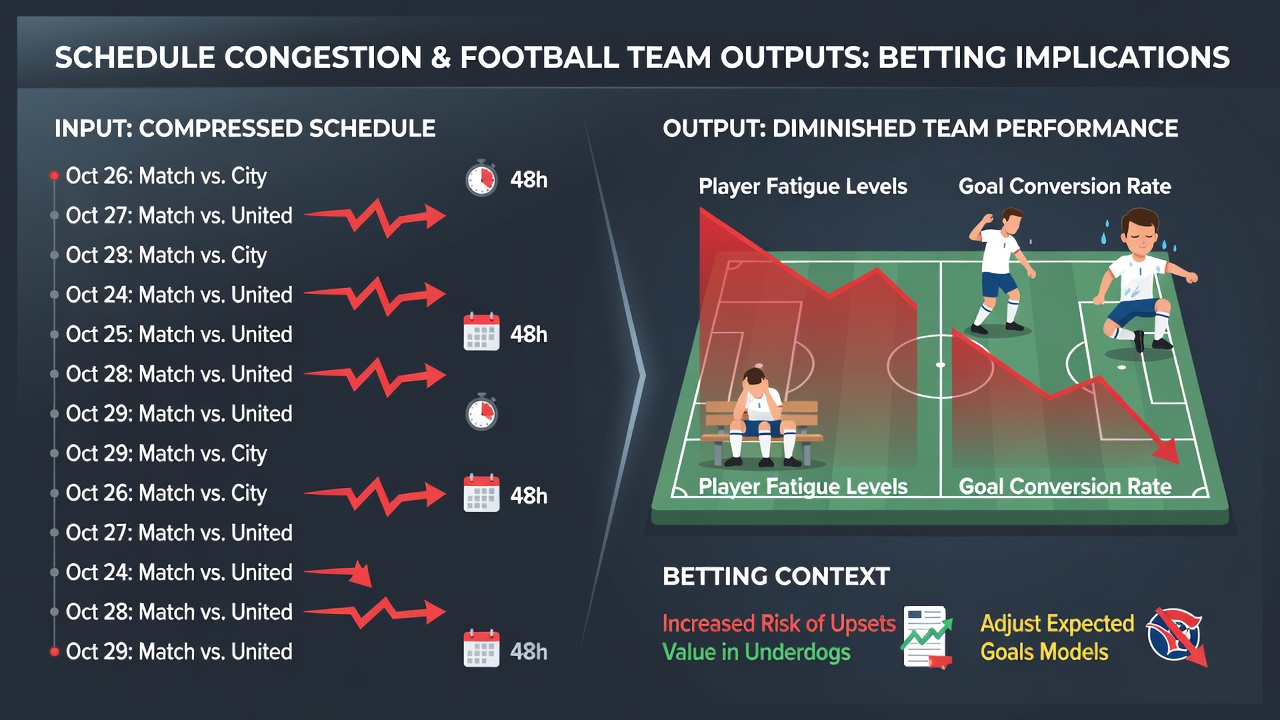
Schedule congestion in football occurs when clubs face multiple matches within short timeframes, often spanning domestic leagues, cup competitions, and European fixtures all at once, and researchers have tracked how this pattern alters team outputs in measurable ways that directly influence betting markets. Data from recent seasons shows reduced recovery periods lead to higher injury rates, lower sprint distances, and shifts in goal-scoring patterns that odds compilers adjust for in real time.
Defining Schedule Congestion in Modern Football
Clubs in top European leagues routinely encounter fixture piles when international breaks, winter tournaments, and continental campaigns overlap, and analysts at organizations like UEFA have documented average match intervals dropping below four days during peak periods. These compressed calendars force managers to rotate squads more aggressively, yet output metrics such as expected goals and clean-sheet probabilities still decline when teams play three fixtures inside eight days. Betting exchanges reflect these changes through adjusted lines on totals and handicap markets, where bookmakers incorporate historical performance drops rather than relying on form from rested weeks.
Player-Level Effects and Recovery Data
Studies tracking elite players reveal elevated muscle-injury incidence after congested blocks, with hamstring strains rising notably when rest drops under 72 hours between games, and sports-science teams at clubs now monitor GPS data to quantify cumulative load. Figures from the 2024-2025 campaign indicated teams in multiple competitions lost 12 to 18 percent more match minutes to injury during December through March compared with less crowded autumn schedules. Bettors who examine these patterns often focus on player-absence markets and over-unders, since reduced squad depth correlates with fewer high-quality chances created and more low-scoring draws in late-season fixtures.
Team Output Changes Visible in Match Statistics
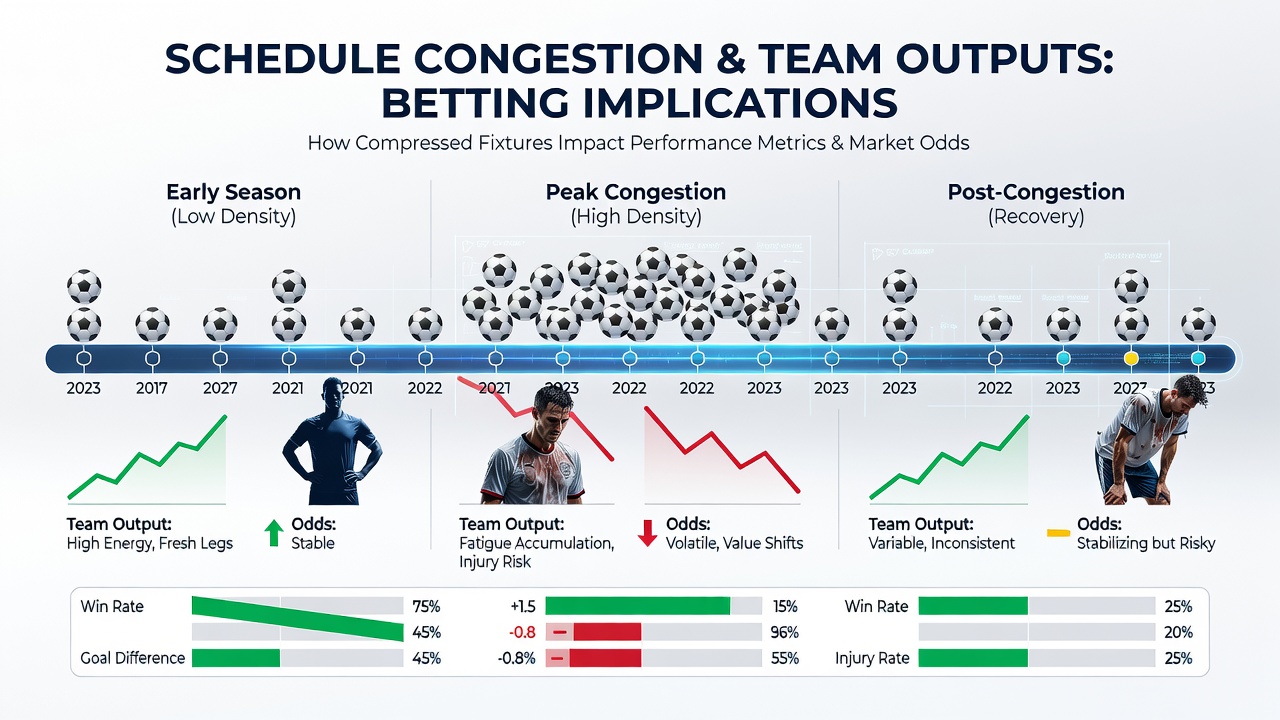
Performance databases show declines in high-intensity running and pass-completion rates when teams play midweek and weekend games without adequate recovery, while set-piece conversion and defensive organization also suffer measurable drops. One analysis of Premier League matches from 2022 onward found that sides contesting European ties recorded 0.4 fewer expected goals per game in the following domestic fixture when the interval was 48 hours or less. These output shifts appear consistently across attacking and defensive metrics, prompting betting platforms to widen margins on both team totals and clean-sheet prices during known congestion windows.
Betting Market Adjustments and Historical Patterns
Odds compilers integrate fixture-density models that weigh travel distance, pitch conditions, and squad rotation likelihood, and exchanges have shown sharper price movements on over-unders once congestion indicators trigger. Historical data covering the 2018 through 2025 seasons demonstrates that teams with three or more matches inside ten days produced under-2.5-goal results 7 percent more often than their season-long average. Markets for both corners and cards also widen during these blocks because fatigue tends to reduce open play while increasing stoppages and disciplinary incidents. Observers note that sharp bettors monitor published squad lists released 48 hours before kickoff to identify rotation signals that further influence live odds.
August 2026 Context and Expanded Calendars
The 2026-2027 season opens amid discussions around expanded club commitments following the 2026 World Cup cycle, with August fixtures already showing early congestion for sides entering multiple pre-season tournaments and domestic cups. Planning documents from several leagues indicate the first international break arrives later than in previous years, leaving a compressed August-September window where teams may face five matches inside 21 days. Early indicators from training-load studies suggest similar output reductions could surface in opening-week betting lines, particularly on totals markets and handicap spreads where rested versus congested sides meet. Regulatory bodies in Australia and Canada have begun requiring clearer disclosure of fixture-related risk factors in operator marketing, which may indirectly affect how markets present congestion data to users.
Strategic Considerations for Data-Driven Bettors
Those examining schedule density often cross-reference fixture lists with injury reports and travel logs to build models that forecast performance decay, and academic papers from institutions such as the University of Queensland have quantified how successive short recovery periods compound across a month-long block. These approaches feed into accumulator selections where bettors target sides coming off European midweeks against domestically rested opponents. Line-shopping across multiple platforms remains common because different operators weight congestion variables at varying speeds, creating short-lived discrepancies in totals and player-prop markets. Research from the Journal of Sports Sciences further highlights that defensive metrics erode faster than attacking ones under load, which influences the relative value of clean-sheet versus goalscorer bets during peak periods.
Conclusion
Schedule congestion produces consistent, measurable changes in football team outputs that propagate through betting markets via adjusted probabilities on totals, handicaps, and performance props. Data from multiple seasons and governing bodies demonstrates elevated injury risk, reduced high-intensity actions, and altered scoring patterns whenever rest intervals fall below recovery thresholds. As calendars evolve into 2026 and beyond, these effects are expected to remain central to both performance analysis and odds compilation across major leagues.