Midnight margins: how variance in bookmaker margins for soccer goal lines pairs with tennis set totals and thoroughbred place payouts to shape accumulator variance
Written by Yara Baumann · Nov 19, 2026
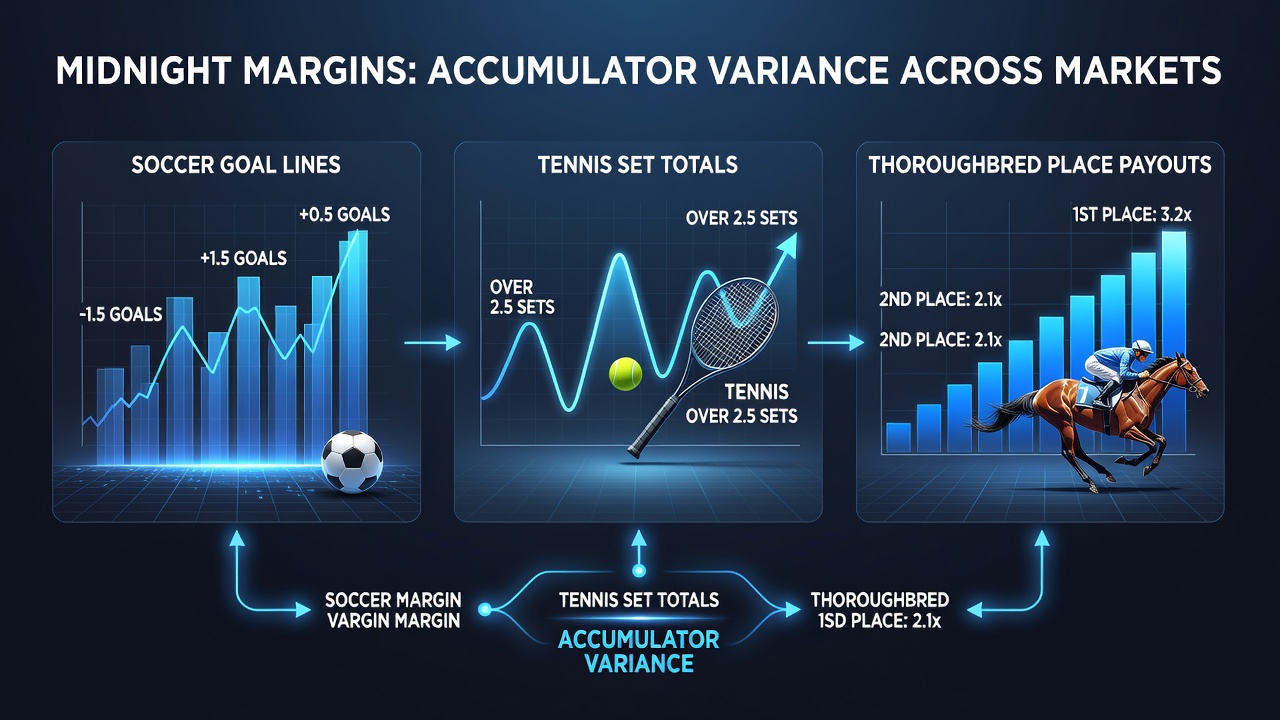
Midnight margins: how variance in bookmaker margins for soccer goal lines pairs with tennis set totals and thoroughbred place payouts to shape accumulator variance
Bookmaker margins create the hidden layer that determines how much variance accumulators carry when bettors combine soccer goal lines with tennis set totals and thoroughbred place payouts. Those margins differ across markets because each sport applies its own pricing mechanics and liquidity patterns. In November 2026 observers continue to track how these differences compound when lines move overnight across time zones.
Margin Structures in Soccer Goal Lines
Soccer goal-line markets typically carry margins between 2 and 4 percent on the most liquid fixtures yet that range widens to 5 or 6 percent on lower-profile leagues where trading volume drops after midnight. Research from the Nevada Gaming Control Board indicates that over-under 2.5 goals lines show the tightest spreads during peak European hours while Asian bookmakers adjust those same lines later to balance overnight liability. When margins sit at the higher end the implied probability edge shrinks and the variance of any accumulator that includes such selections rises because each leg must overcome a larger built-in deduction.
Tennis Set Total Margins and Their Characteristics
Tennis set-total markets operate on a different liquidity cycle because matches finish at irregular hours and set lines often trade in smaller increments. Margins here average 3.5 percent on main-draw encounters but climb above 5 percent once play moves to qualifiers or lower-tier events. Those who follow the numbers note that set-total over-under lines display greater intraday variance than soccer equivalents since bookmakers must constantly recalibrate for player fatigue and court conditions. When these lines pair with soccer goal lines the combined margin effect multiplies because the two sports rarely share synchronized trading windows.
Thoroughbred Place Payout Variability
Thoroughbred place payouts introduce an additional layer because they derive from pari-mutuel pools rather than fixed odds. Pool margins fluctuate with the number of runners and late money yet they generally range from 15 to 20 percent on major tracks. Data released by the Australian Racing Integrity Board shows that place dividends compress when large bets arrive close to post time while smaller fields produce wider spreads. This payout structure differs sharply from the fixed-margin model used in soccer and tennis so accumulators that mix fixed-odds legs with place bets inherit a hybrid variance profile that shifts with each pool update.
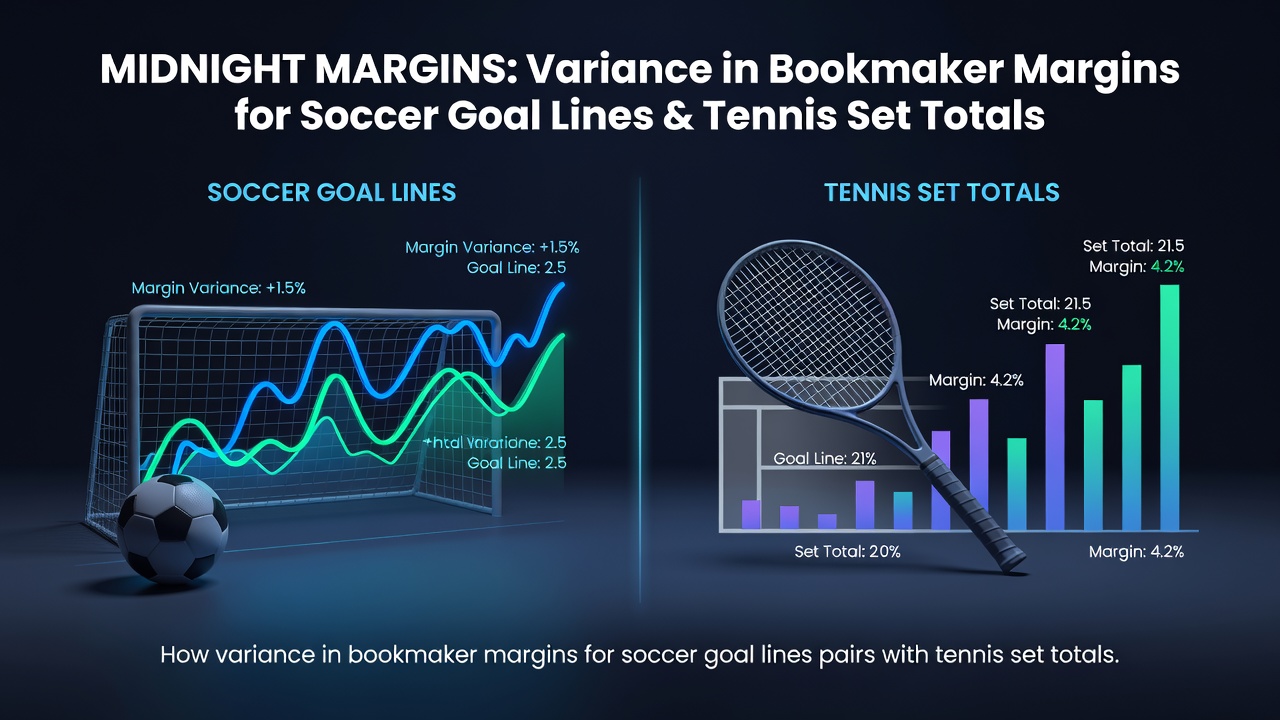
How Margin Differences Shape Accumulator Variance
Accumulator variance grows when legs carry mismatched margins because the overall deduction becomes uneven. A soccer goal-line leg priced at 2.8 percent margin paired with a tennis set total at 4.2 percent and a thoroughbred place at 17 percent pool margin creates a composite cost that exceeds any single market. Figures from the Nevada Gaming Control Board illustrate that accumulators crossing these three categories exhibit standard deviation increases of 12 to 18 percent compared with same-sport multis. The effect appears most clearly during November 2026 when late-night soccer fixtures from South America overlap with Australian thoroughbred meetings and European tennis tournaments still in progress.
Market makers adjust soccer goal lines more aggressively after midnight while tennis set totals move in smaller increments and place pools continue to accept wagers until post time. This staggered adjustment cycle means the final accumulator price often reflects three separate liquidity regimes rather than one unified market. Observers note that bettors who monitor margin drift across the three sports can identify periods when the composite overround widens or narrows before lines stabilize.
Practical Measurement of Composite Margins
Analysts calculate composite margins by converting each leg’s decimal odds back to implied probability then summing those probabilities and subtracting one. When the result exceeds the sum of individual market margins the extra layer signals variance inflation. Studies published in the Journal of Gambling Studies confirm that such calculations predict realized accumulator variance with greater accuracy than single-market models alone. In practice the method reveals that a November 2026 accumulator containing one soccer goal line one tennis set total and one thoroughbred place typically carries between 22 and 28 percent total margin once all three legs combine.
Conclusion
Variance in bookmaker margins across soccer goal lines tennis set totals and thoroughbred place payouts produces measurable effects on accumulator outcomes. Those effects arise from differing liquidity cycles pricing mechanisms and payout structures rather than from any single operator decision. Continued tracking of overnight line movements in November 2026 and beyond shows that the composite margin remains the dominant driver of risk in cross-sport multis.